
A close reading of the statutes behind the NOTAM that grounded journalists over Minneapolis.
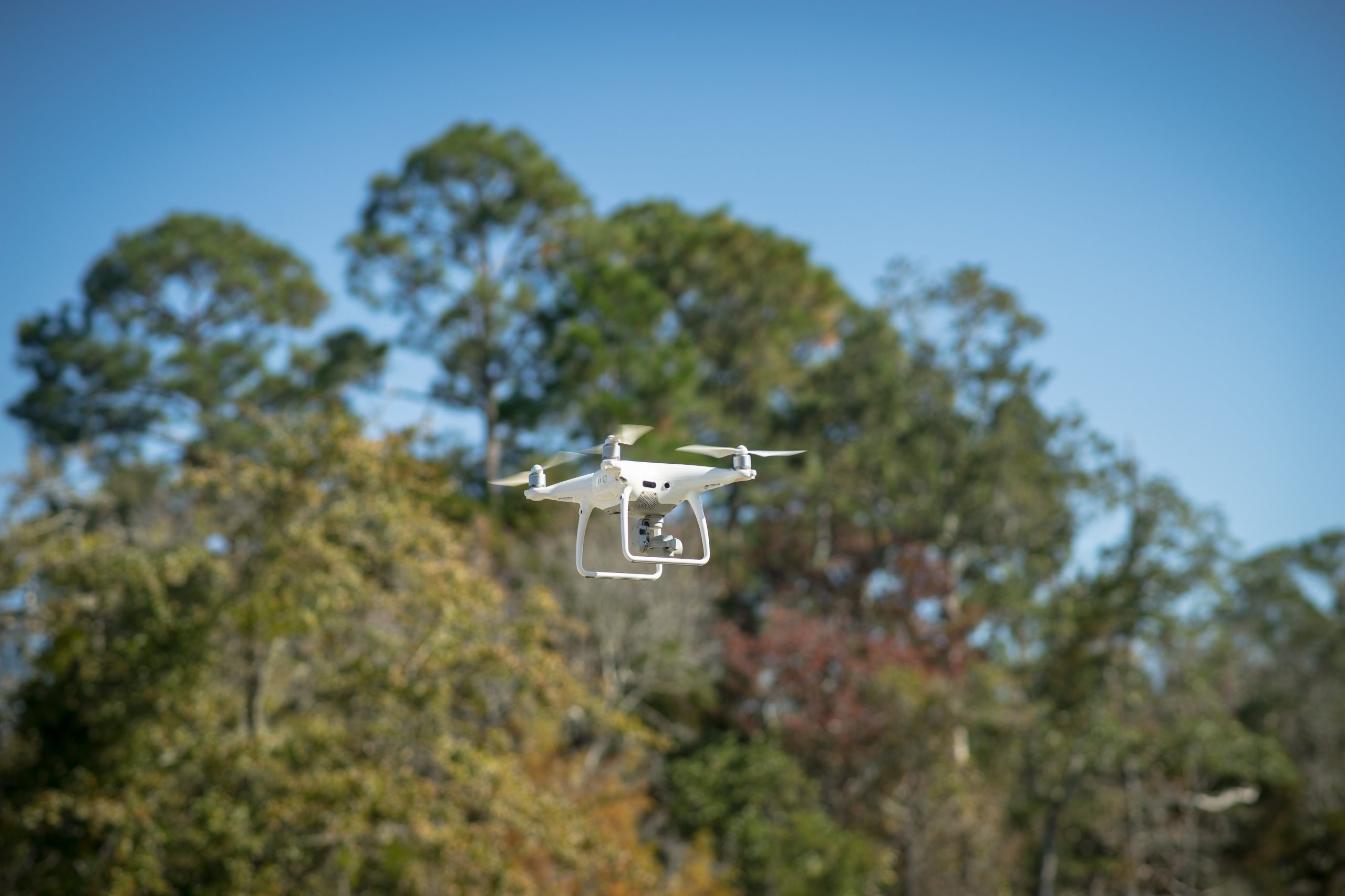
In January 2026, the FAA expanded a national security NOTAM to cover DHS and CBP mobile assets, effectively creating a no-fly zone around ICE vehicles operating in Minneapolis and elsewhere. Drone operators faced the threat of civil and criminal penalties for flying within 3,000 feet of these assets. Because ICE agents routinely operate in unmarked vehicles, this made compliance impossible. Journalists who rely on drones to document law enforcement activity were grounded overnight.
I posted about this when the NOTAM first dropped, and I want to lay out the full argument of my opinion: the underlying statutes do not support the government’s interpretation of this restriction.
A necessary caveat before I get into the analysis: I am not a lawyer, and nothing here is legal advice. Even if the text of the law does not support this restriction, that does not mean DHS will not enforce it, and the consequences of testing that boundary with a drone in the field are real. Agents have broad discretion to claim interference, seize equipment, and potentially destroy aircraft they deem to be threats. This post is about what the statute says. It is not a recommendation to fly near ICE operations.
The Statutory Basis
The NOTAM cites three statutes as its legal authority: 6 U.S.C. § 124n (DHS/DOJ), 10 U.S.C. § 130i (DOD), and 50 U.S.C. § 2661. The relevant one for the ICE application is 6 USC § 124n, which defines the authority for restricting sUAS operations near DHS and DOJ facilities and assets.
An important timeline note: on December 18, 2025, the FY2026 NDAA (P.L. 119-60) was signed into law. The SAFER SKIES Act provisions within it amended §124n, broadening some of the language I discuss below. The ICE NOTAM expansion happened in January 2026, shortly after those amendments took effect. When I first posted this analysis on Bluesky, I was working from the original 2018 statutory text and did not account for the NDAA changes. I have updated this post to reflect that. The amended language weakens one of my three arguments but, IMHO, does not resolve the core problems with how this NOTAM was applied.
“Facilities, Aircraft and Vessels” vs. “Enforce the Law, Protect the Public”
Under the original 2018 text of §124n, the DHS-specific missions in (k)(3)(C)(i)(I) explicitly authorized protection of “facilities, aircraft and vessels” for CBP functions. It conspicuously did not list “vehicles.” Fleet SUVs and rented Chevy Suburbans are not facilities, they are not aircraft, and they are not vessels.
However, the SAFER SKIES Act amended the “covered facility or asset” definition to include assets relating to “a Federal law enforcement, correctional, and homeland security agency mission necessary to enforce the law, protect the public.” That is significantly broader language, and it arguably gives DHS textual footing to claim that ICE enforcement vehicles fall within the statute’s scope in a way the original enumerated categories did not.
So this first argument is weaker than I originally stated. The amended statute is more permissive. But the next two problems remain, and they are the more fundamental ones.
The “Covered Asset” Problem
Even under the amended statute, the “covered facility or asset” definition still requires that an asset be identified as “high-risk and a potential target for unlawful unmanned aircraft activity” by the Secretary, through a formal risk-based assessment. The NDAA did not remove this requirement.
I am dubious that all of the fleet vehicles, let alone all of the rented SUVs, have gone through this process. The threshold is high when you look at other agencies with similar protections. We are talking about presidential motorcades and nuclear weapon transport convoys. Not a column of unmarked Durangos.
The “Active Investigation” Argument Doesn’t Hold Either
The last argument the government could deploy is that the vehicles are part of an “active investigation” as defined in (C)(iii)(III). But that subsection puts constraints on what qualifies: specifically, the restriction must be limited to a specified timeframe and location.
The ongoing, open-ended, geographically unbounded NOTAM does not align with those requirements. I don’t believe the government can reasonably declare the entire airspace above every city where ICE operates to be part of one continuous “active investigation” with no end date and no geographic limits.
The Enforcement Reality
Of course, even if the statutory text does not legally support the claim that drones are banned near ICE convoys, that does not mean DHS won’t try to enforce it anyway. Agents can still claim interference or use the NOTAM as a pretext for intimidation or seizure. The original NOTAM created a chilling effect regardless of whether anyone was actually prosecuted under it, and that was arguably the point.
The original intention of these flight restrictions was to protect presidential motorcades and nuclear warhead transports. The NDAA broadened the statutory language, but even under the expanded text, the procedural requirements for designating covered assets and the constraints on active investigation authority remain. Applying a blanket, open-ended NOTAM to immigration enforcement operations across entire cities still exceeds what the statute authorizes.
Update, April 17, 2026: The FAA Blinks
This week, Minnesota journalist Rob Levine, who had sued the FAA over the TFR earlier this month, got a significant win. Matthew Gault at 404 Media has the full story. After Levine’s attorneys filed a motion arguing that the TFR violated his First Amendment rights, the FAA rescinded the original restriction. The legal team’s core argument targeted the unmarked vehicle problem directly, characterizing the restriction as creating an impossible-to-comply-with network of invisible, moving no-fly zones across entire cities.
The FAA replaced the old TFR with a new advisory. The revised version drops the 3,000-foot proximity language and, critically, removes the threat of civil and criminal penalties. But it is not a clean win. The new advisory expands the list of protected agencies to include the Department of Justice and the Department of War, and it preserves the government’s claimed authority to interfere with, seize, damage, or destroy drones deemed to be threats to covered mobile assets. In plain terms: you will not go to jail for flying a drone near an ICE vehicle, but they may still shoot it down.
Levine’s attorneys at the Reporters Committee for Freedom of the Press have signaled they intend to continue pressing the case in the D.C. Circuit, arguing that the original restriction should never have been implemented at all.
From the beginning, I maintained that the government’s interpretation of the regulation behind this NOTAM was flawed and incorrectly applied. My original analysis was built on the pre-NDAA statutory text, and the amended language does give DHS broader footing on the asset category question than I initially acknowledged. But the core structural problems with the NOTAM, the missing risk-based assessment process and the open-ended timeframe and geography, were never addressed by the NDAA amendments. The legal challenge confirmed that the enforcement framework could not withstand scrutiny. The FAA’s decision to rescind and soften the restriction, immediately after a serious legal challenge was filed, speaks for itself.
There is still work to do. The new advisory’s retained authority to destroy drones, what you might call kinetic “mitigation,” is its own problem, and the expanded agency list means the scope of claimed authority is actually broader now than it was in January. But the criminal penalty regime is gone which is important.
I am not a lawyer. I would welcome reporting and analysis from actual legal experts on this topic which on the whole has been sorely lacking in my opinion. And to reiterate: even if the legal text does not support the government’s position, DHS retains the claimed authority to shoot drones out of the sky. The fact that a restriction may be legally indefensible does not make it safe to ignore in practice.